Derbyshire

Map of the Derbyshire Area
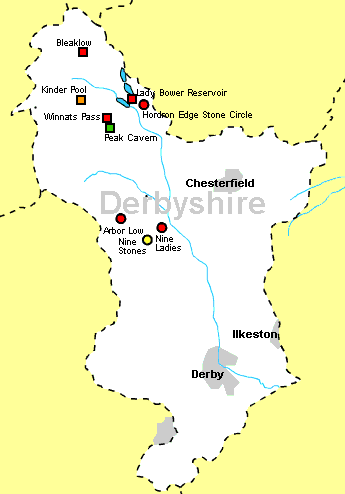
Map of Derbyshire

County Council

Derbyshire is a county that is located in the East Midlands and is bordered by West Yorkshire, Greater Manchester, South Yorkshire, Nottinghamshire, Staffordshire, Cheshire and Leicestershire. A large part of the Peak District National Park is located within Derbyshire and the Pennines (a chain of hills and mountains) is overlapped by northern Derbyshire Cotton in the Elms is the site of the farm which has been recognised as the furthest point from the sea in Britain and therefore the county can lay claims as being in the centre of the UK.

It is a non-metropolitan county with around 990,400 inhabitants (source: link). The county is largely rural and sparsely populated with an average density of 337 people per km squared. Most of the land within Derbyshire is agricultural upland and over 75% of the populace reside in 25% of the area (source: link). Derby is the largest city in the county and Chesterfield is the second biggest.

Throughout the county there are sites of Neolithic burial grounds which consist of chambered tombs designed for communal burial. The tombs in Five Wells and Minning Low date back to 2500BCE (source: Smith, pp. 7). Derby has historically had rich natural resources such as iron, coal, lead and limestone. This has led the economy to be largely industrial with large quarries supplying the lime and steel factories. The Industrial Revolution had a massive impact on the economy with the addition of cement manufacture and water power to the industries in Derbyshire. There are many nationally famous companies which are based in Derbyshire such as Thornton's, JCB and Rolls-Royce. The county is also famous for Buxton Water which is sold all over the world.

The two main football teams of the county are Chesterfield FC and Derby County FC both of which play league matches. Tourist attractions of the area include the Peak District and Chatsworth House. The Peak District National Park covers 555 square miles of the north of Derbyshire and spans across the limestone plateaus, dales and moors. There are more than 22 million visitors to the Park annually causing it to be the second most visited national park in the world (source: link).

Transport

Banks and Building Societies

Tourism - Official Site

News and Media

University

Library

Museum

  • Derby Museum and Art Gallery

Find: Near: